

Filter
Category
Tag
10 article found
Re-evaluating Manga Panel Segmentation with Gemini 4 Carbon, Claude Fable 5.2, and Kimi K3.1
As our November 2026 LLM benchmark, we re-evaluated manga panel segmentation accuracy across six models, adding Gemini 4 Carbon, Claude Fable 5.2, and Kimi K3.1. While Claude Fable 5.2 showed notable visual perception improvements, Kimi K3.1 made huge strides, and Gemini 4 Carbon fixed previous diagonal misrecognitions, GPT 6.1 Sol was once again the only model capable of flawlessly parsing overlapping speech bubbles in consecutive slim panels.
PdM Letter
2026.11.11
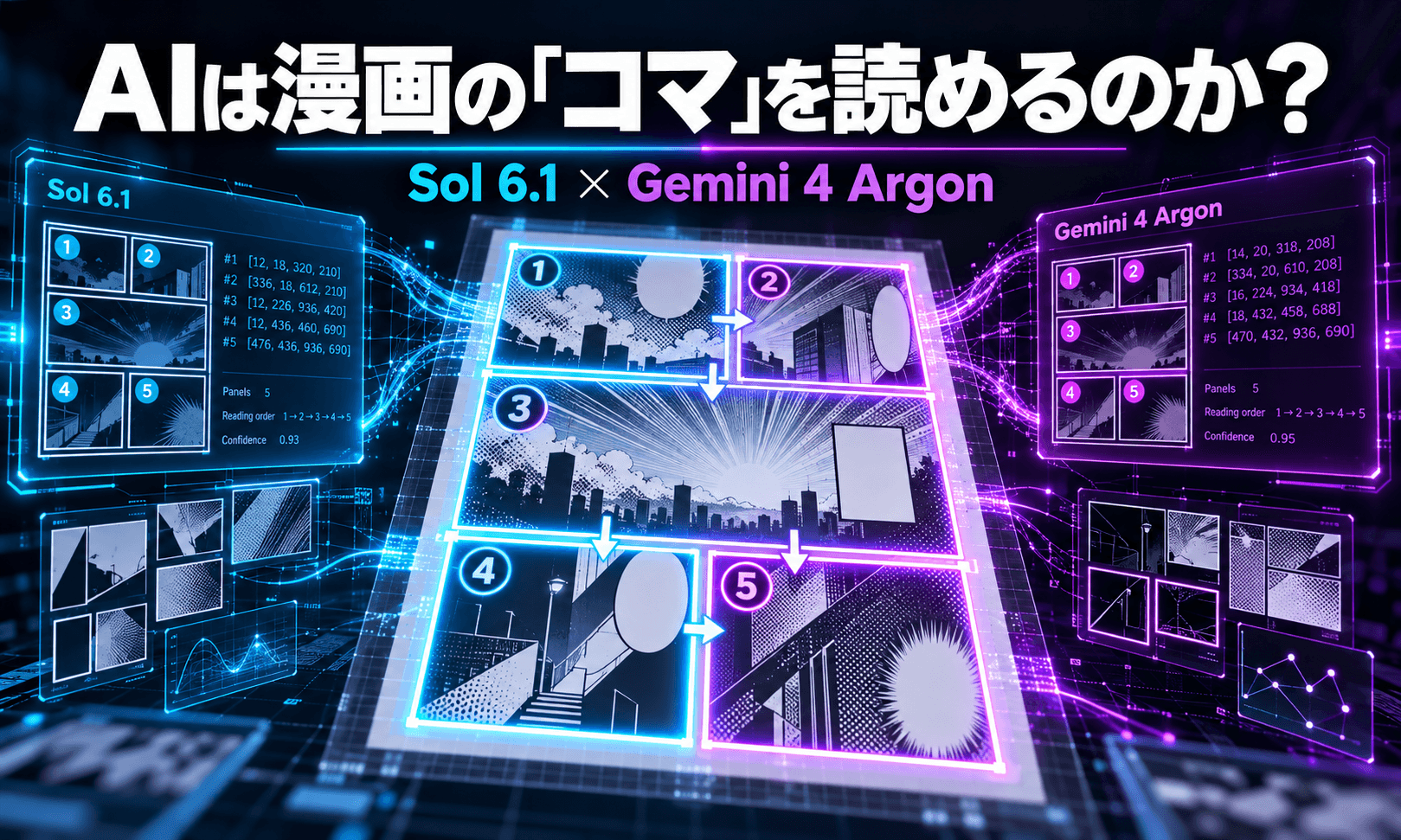
Trying Out Manga Panel Segmentation with Gemini 4 Argon
Improved manga panel analysis accuracy using Gemini 4 Algon. After benchmarking various LLMs, GPT 6.1 Sol demonstrated the highest recognition accuracy. As a result, STORYAI v11 adopted GPT 6.1 Sol as the primary model with Gemini 4 Algon as a fallback, significantly improving handling of complex panel layouts and dialogue extending beyond panel borders.
PdM Letter
2026.11.04
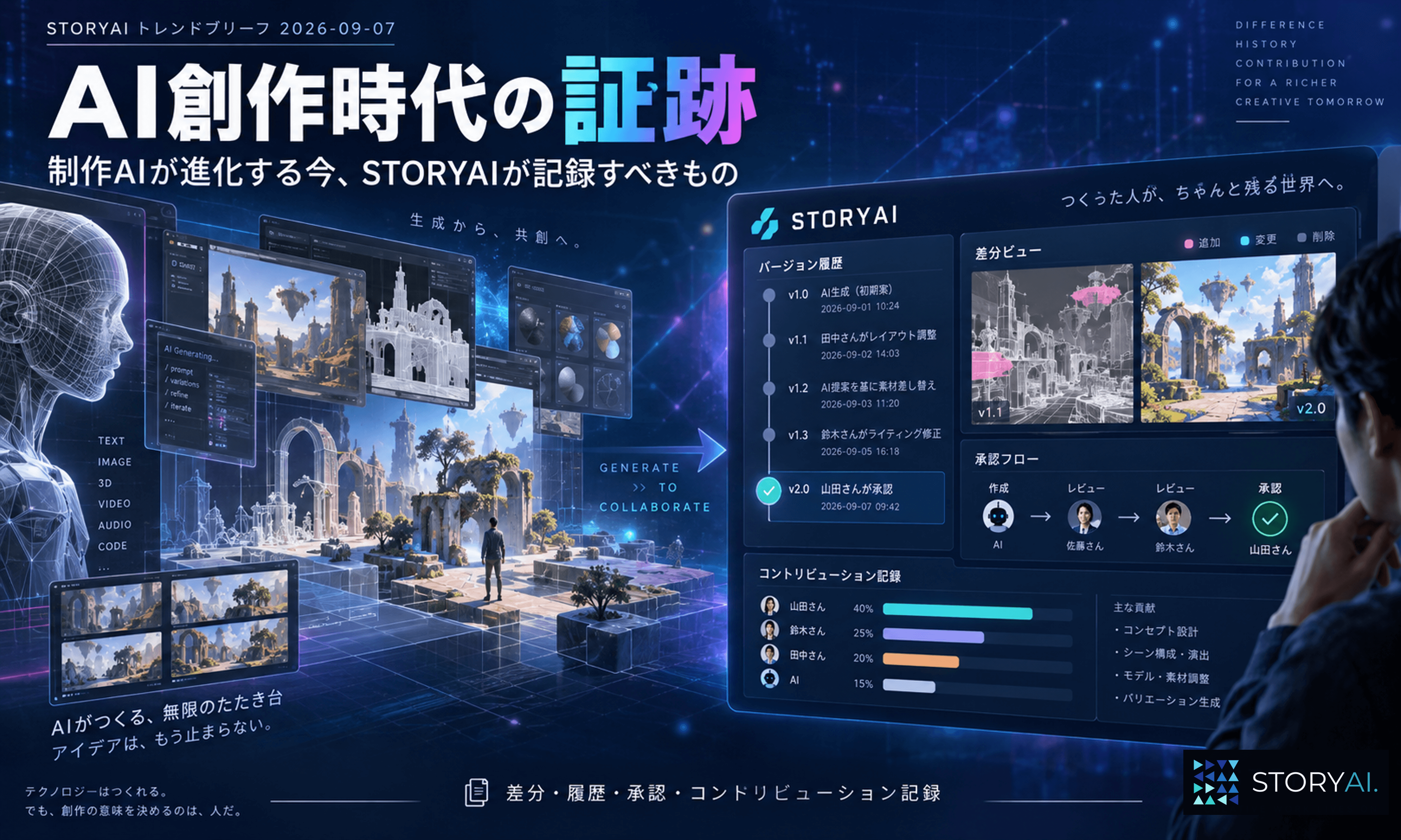
Now That AI Is Entering the Production Pipeline: What STORYAI Needs to Consider
With the arrival of GPT-6 Astra, generative AI is moving beyond simply generating text and images toward operating across creative software like Blender and Unreal Engine. While Playco's case study demonstrated a 50% reduction in manual revisions, creators have raised concerns regarding authorship and the imitation of existing works. Rather than chasing 3D production agents themselves, STORYAI should leverage its existing diff, history, and timeline capabilities to build a mechanism that tracks "who made what decision, where, and how." Specifically, a "Creative Contribution Log" would record AI processing steps, asset URLs, human edits, decision-makers, and approval timestamps on a per-work basis, exportable as JSON or PDF. A practical first step is to trial this across 5–10 projects to evaluate recording overhead, approval turnaround times, rework related to rights and attribution, and user satisfaction.
PdM Letter
2026.11.04
AI-Driven Development at STORYAI: What We Delegate to AI vs. What Humans Retain
A record of AI-driven development practices at STORYAI. We share our journey from establishing a workflow where humans retain specifications, decisions, and approvals while AI agents handle implementation, verification, and logging, to selectively using Claude, GPT, and Gemini across development and internal product features, and replacing attention-dependent rules with automated checks, shared guidelines, CI, and weekly metrics.
PdM Letter
2026.10.20
Before Scaling with AI, Decide Which Time to Reclaim: Learning "Single-Step Experiments" from 10 Newsrooms
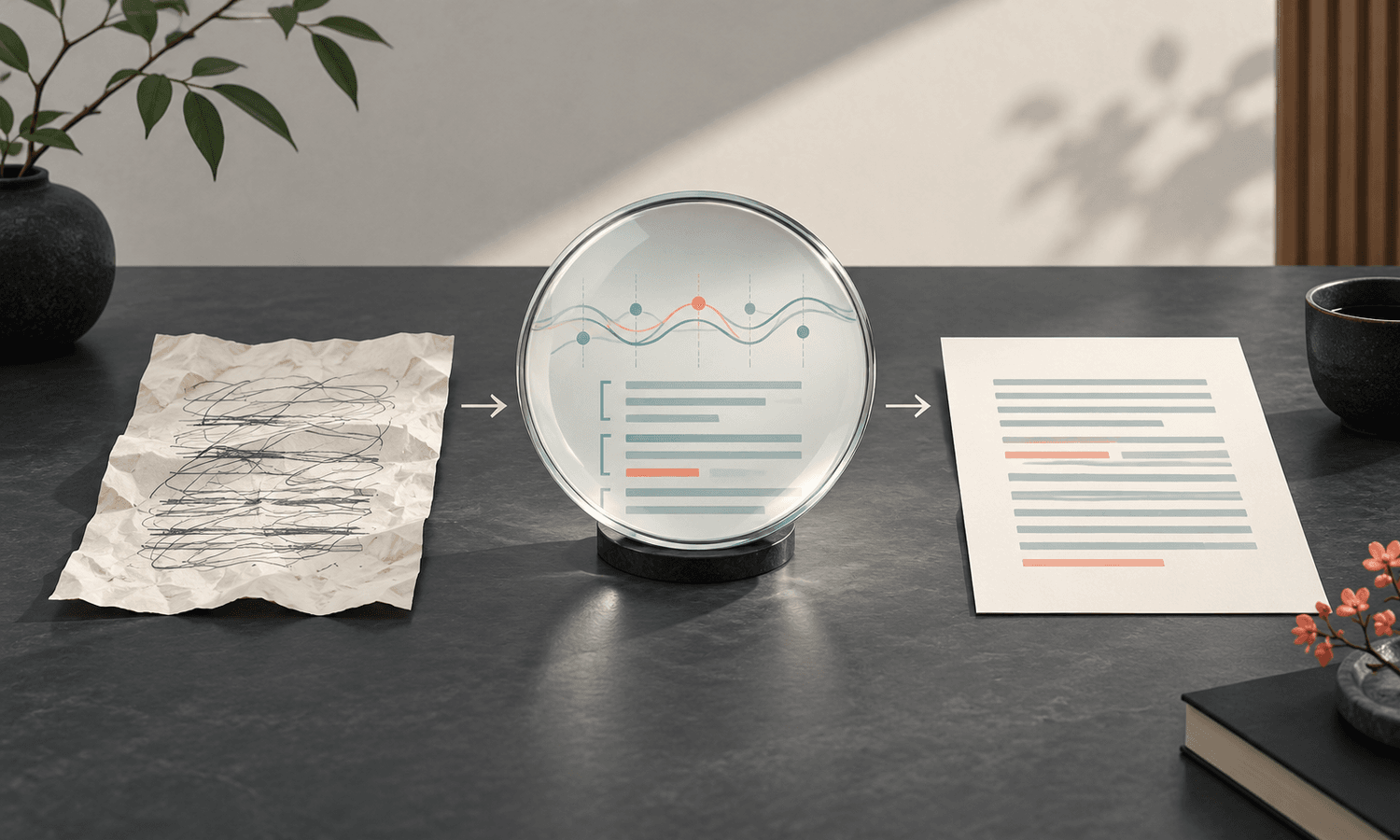
OpenAI and WAN-IFRA are launching a 12-week AI implementation support program for 10 newsrooms. Based on its structure, we examine how creators can test generative AI on a small scale: one step, five pieces, and 14 days.
PdM Letter
2026.10.17
9/26 STORYAI Update Information v9.0.0 / v9.0.1
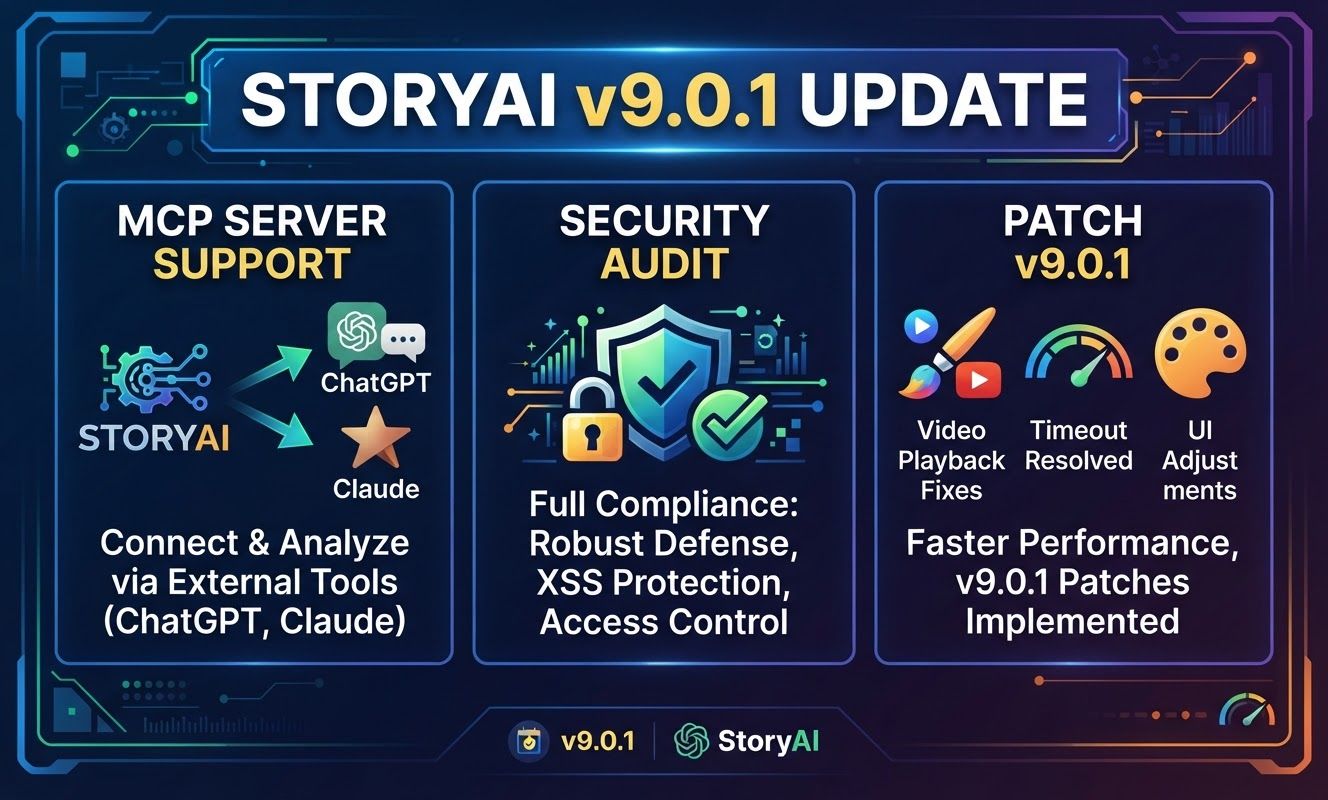
We introduced MCP server support to allow external AI tools to leverage our analysis engine, alongside security enhancements verified by a third-party audit. The stabilization patch (v9.0.1) also adopts the latest AI models, resolves generation timeouts under high load, fixes video preview issues, and makes minor UI adjustments to enhance expressive capabilities and overall stability.
PdM Letter
2026.10.17

Preserving Creative Intent in an Era of Abundant Generative AI Assets: Insights from Adobe, OpenAI, Runway, and Meta
Generating assets with generative AI has become faster. But what about selecting what fits your intent, making revisions, and finalizing the project? Based on the latest updates from Adobe, OpenAI, Runway, and Meta, we explore shifts in production infrastructure and the potential of leveraging STORYAI's analysis and version history.
PdM Letter
2026.10.17

STORYAI: From "Generative AI" to "AI Director" — The Next Creative Production Experience Revealed by 3D Previz × Generative AI
PdM Letter
2026.10.17

An Editor by the Writer's Side: A Guide to the STORYAI v10.0.0 Creation Workspace
Get answers to doubts like 'Does this plot development work?' or 'Does this contradict the lore?' without interrupting your flow. Here is a walkthrough of the revamped creation workspace in v10.0.0, from starting your draft to publishing your work.
PdM Letter
2026.10.17

Organizing PMO Checkpoints from Meeting Minutes — STORYAI's Meeting Trouble Early Detection Analysis
STORYAI v10.0.0's Meeting Trouble Early Detection Analysis organizes follow-up requirements, client feedback, and tasks from meeting minutes. By linking meetings of the same project chronologically in Studio, you can review trends and use them as decision-making material for the PMO.
News
2026.10.17